Trusted Since 1978
Anglo American/De Beers
“I was speaking to Xyleme, and was telling them how amazing Omni is at translating their content.”
One Workflow for eLearning Translation, Localization, and Production
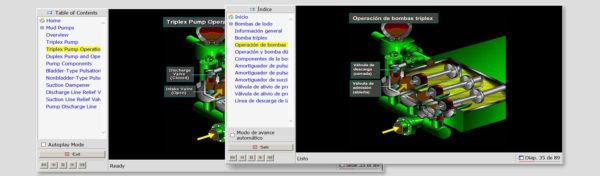
We translate and localize a wide range of eLearning and training content, including online courses, LMS materials, assessments, instructor-led training, and supporting documentation across both creative and highly technical subject matter.
We support a diverse client base, from eLearning providers and educational organizations, to in-house training teams within oil and gas, energy, manufacturing, engineering, and other technical industries.
Our services cover a broad range of global languages, including the most widely used international languages as well as key U.S. languages, such as Spanish, enabling organizations to communicate effectively with both domestic and global audiences.
Every eLearning translation project is delivered as a turnkey service, combining subject-matter linguists, secure workflows, dedicated project management, and in-house production expertise.
With decades of experience and more than 80% of our clients partnering with us for over 10 years, Omni acts as a trusted, long-term extension of your team—supporting effective training delivery across global audiences while managing the technical complexity behind the scenes.


Files Types We Work With
- Articulate Storyline
- Adobe Captivate
- Xyleme (Click here for some Xyleme Pointers)
- Lectora
- Adobe Presenter
- Camtasia
- iSpring Presenter
- Adobe Illustrator
- Mohive
- Moodle
- Toolbook
We work across a wide range of file types and formats, including eLearning authoring files, SRT, documents, XML, web-based content, JSON, audio, video, graphics, and other multimedia assets.
Our Process
As every eLearning project is different, your dedicated project team will tailor the workflow around your course content and language requirements. We can provide a turnkey service covering the full project scope, or support you with specific stages where needed.
As a general guide, a full eLearning localization project can look like this:
- We start by understanding your project requirements and agreeing on the right approach for your content. Your account manager provides a consistent point of contact throughout the project.
- We match native-tongue linguists to your project based on the required language pair and relevant domain knowledge.
- Where courses include multimedia, we can supply voice-overs, dubbing, subtitle translation, captions, transcription, pre-recorded ASL, and audio description. Both AI and human options are available for certain multimedia services.
- Our in-house production studio supports file preparation, desktop publishing, formatting, burning in subtitles, and layout adjustments across multiple file types.
- We carry out QA before delivery and address any issues identified during the review. Once the review is complete, we prepare the final localized assets for delivery according to the agree project requirements.


Built on Long-Term Partnerships
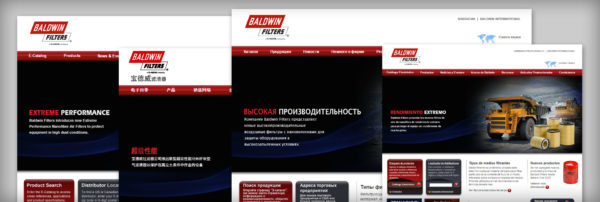
Founded in Houston in 1978, Omni brings decades of language experience to eLearning and training content, with a long history of supporting organizations working with technical material.
As a full-service eLearning translation company, we provide complete localization for eLearning courses and can support wider multimedia content, from voice-overs to subtitles.
We take an honest, consultation-led approach to each project, and we can advise on human and AI-assisted translation options. Our personal service has helped us build lasting relationships, with more than 80% of clients having worked with us for over 10 years.

FAQs
What is eLearning localization?
eLearning localization is the process of adapting a training course for learners in another language and culture.
eLearning localization generally starts with translating the course content itself, but it can also involve adapting other assets, such as voice-overs, videos, subtitles, images, assessments, and interactive content.
The scope of localization depends on the course. For example, a video may need translated subtitles and a new voice-over track, while supporting documents may need translation and layout work.
What eLearning assets may need to be translated and localized?
The scope of a project depends on how a course is built, but assets that may need translation and localization include:
- Course text and supporting documents, including accompanying training materials and employment documents.
- Voice-over content.
- Video and multimedia content, including localized audio track and other multimedia production work.
- Subtitles and captions, including subtitle translation and the option to burn subtitles into video.
- Dubbing and lip-sync content where the course uses spoken video, such as a health and safety instruction video.
- Transcriptions
- Formatted files and layouts that require desktop publishing and layout adjustments after they have been translated.
What platforms and tools can you work with?
We can work with courses created using more common eLearning authoring tools and platforms, including Adobe Captivate, Articulate Storyline, Articulate Rise, Lectora, and iSpring.
We can also support projects destined for learning management systems.
If you use a different authoring tool or have a particular file setup, send us the details. We’ll review the project and agree on the appropriate localization workflow.
What file types can you handle?
- XML
- JSON
- XLIFF
- XLF
- HTML
- CSV
- SCORM packages
- PPTX
- MOV
- MP4
- AVI
- MP3
- SRT
- VTT
- Export files, such as files associated with Captivate, Rise, Lectora, etc.
If your eLearning project uses another format, send us the files, and we can review them as part of the project setup.
Omni also has an in-house production studio for file preparation, formatting, and layout adjustment.
What languages do you support?
We support eLearning translation and localization across a wide range of languages. For U.S.-based training programs, we can help employees with limited English proficiency (LEP) in Spanish, Chinese, ASL, Vietnamese, Tagalog, etc.
We also support global languages such as French, German, British English, Japanese, Korean, Arabic, and Urdu, among others.
Can you help with English-language courses?
Yes, translation does not have to be a part of the project. We can support courses with production work, including desktop publishing, file preparation, voice-overs, subtitles, live captions, transcription, audio description, and ASL interpreting.
You can bring us in for a specific part of the course or discuss a wider production workflow with your dedicated project team.
Can you help make eLearning content more accessible?
We can support accessibility requirements as part of an eLearning project, including subtitles, captions, ASL interpreting, transcription, and audio description.
We can also provide alternative formats where required, such as large print.
Accessibility requirements vary according to the organization and how the training is to be used. The Americans with Disabilities Act (ADA), for example, protects people with disabilities from discrimination, which includes areas such as employment and training.
Can you adapt cultural references?
Yes, a localization workflow will consider the context of the names, locations and workplace references in the content, as they may need to be adapted if they do not make sense for the target audience.
For example, an English-language safety course might use a scenario set in a Houston workplace, with American terminology and humour, that only makes sense to employees in the U.S.
The aim is to keep the training clear and credible for the people actually taking the course.
Can you support live training sessions?
Yes, if your training includes live sessions, we can provide live captions as well as on-site and video remote interpreting.
Does Omni have an in-house production team?
Yes, and for eLearning projects, that gives us the production capabilities to support your course beyond the translation itself without unnecessary handoffs.
Can you handle multimedia localization as part of an eLearning project?
We can support human and AI voice-overs, dubbing and lip sync, subtitle translation, captions, transcription, and audio description.
Can you translate technical eLearning and training content?
Yes, we provide technical translation and use native-tongue linguists who are matched to projects according to both language pair and domain knowledge.
We have experience supporting training content across Oil & Gas, Energy, Manufacturing, Mining, Life Sciences, Healthcare, Engineering, and Automotive.
How long has Omni been providing language services?
Omni was founded in Houston in 1978, giving us decades of experience supporting organizations and training teams with language services.